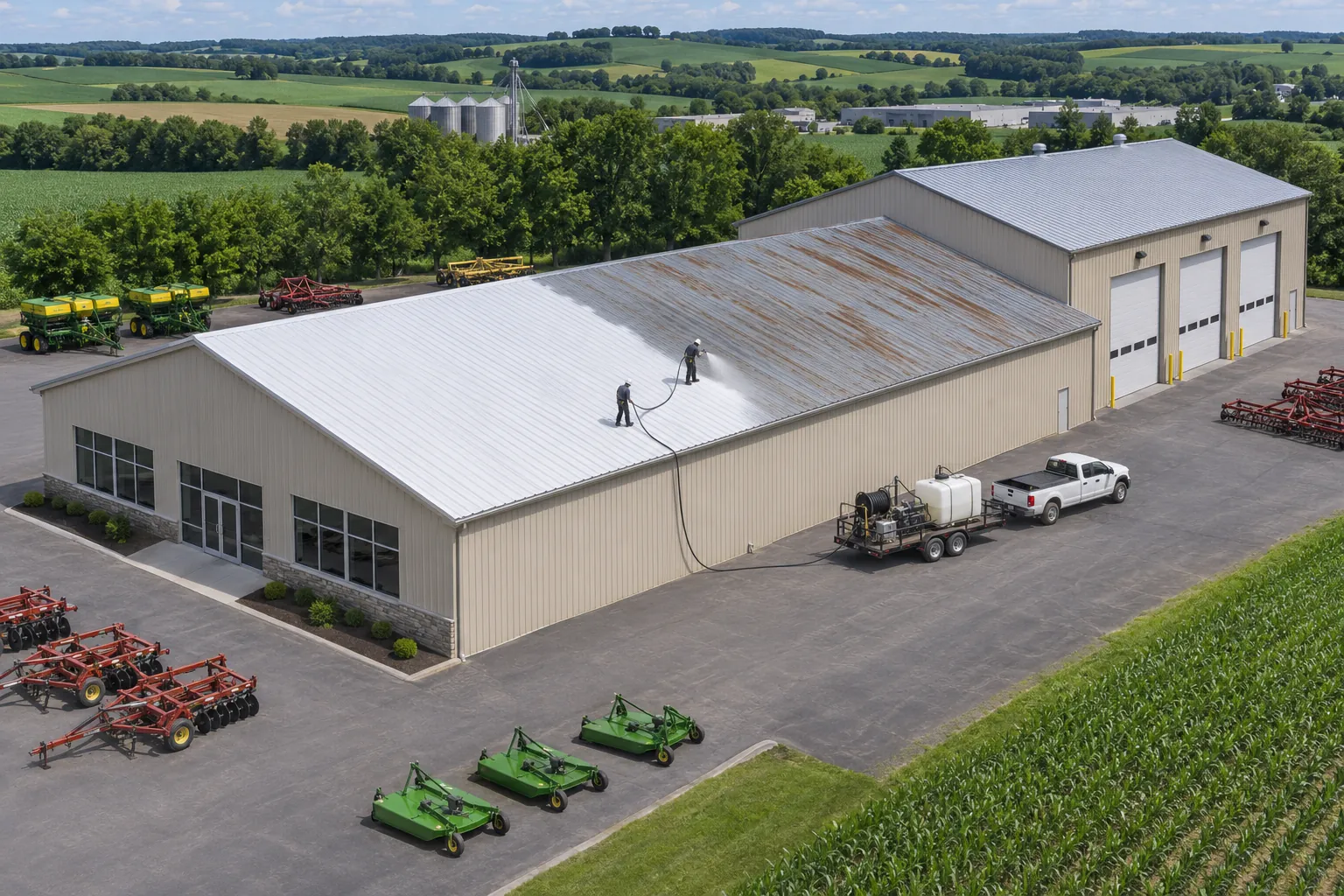
Rust Streaks On A Farm Shop Roof
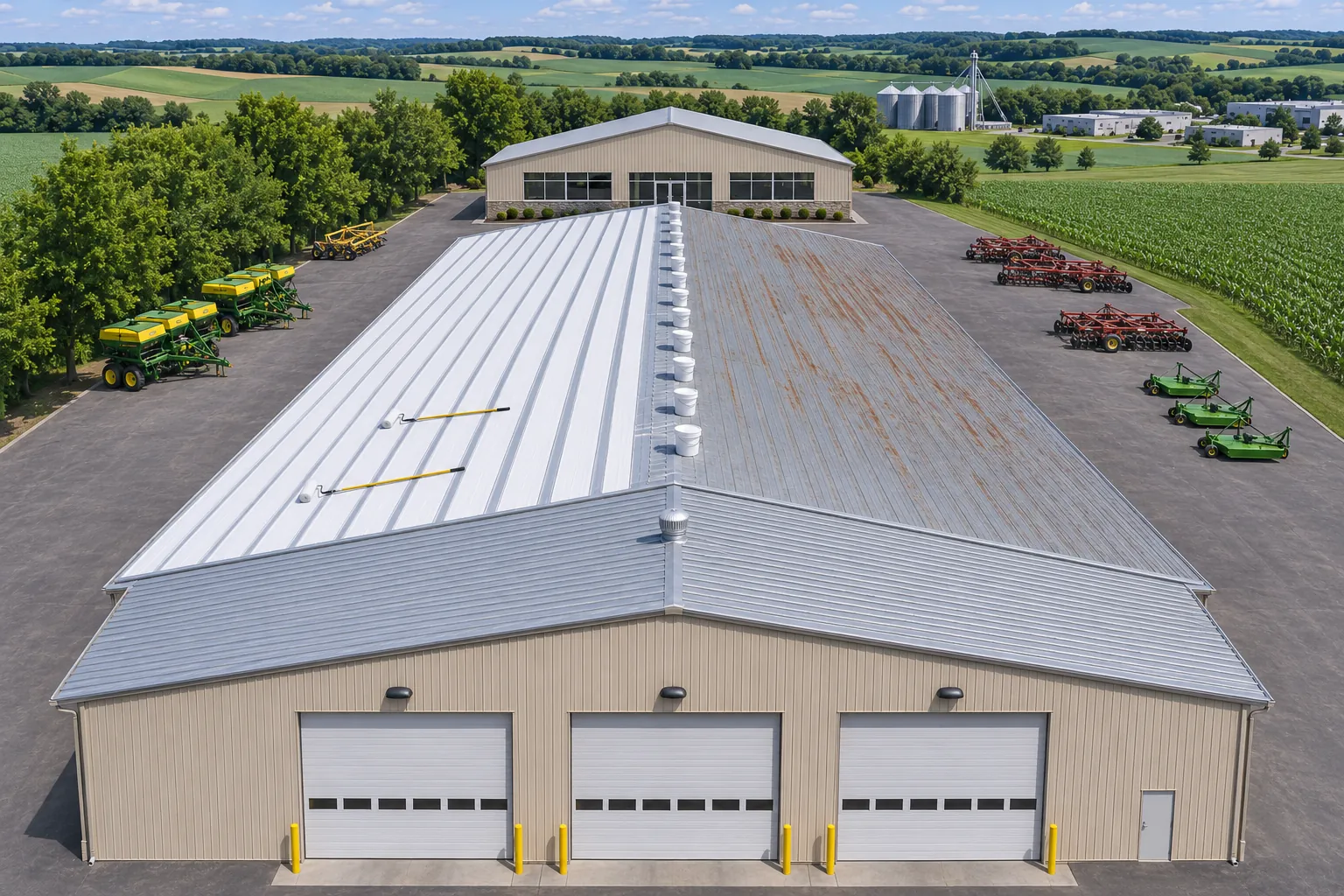
Orange runs down the slope from screw rows and laps on a pole building or shop.
Surface rust has started where washers and laps hold water.
We brush it to firm steel, prime, seal the laps, and coat.
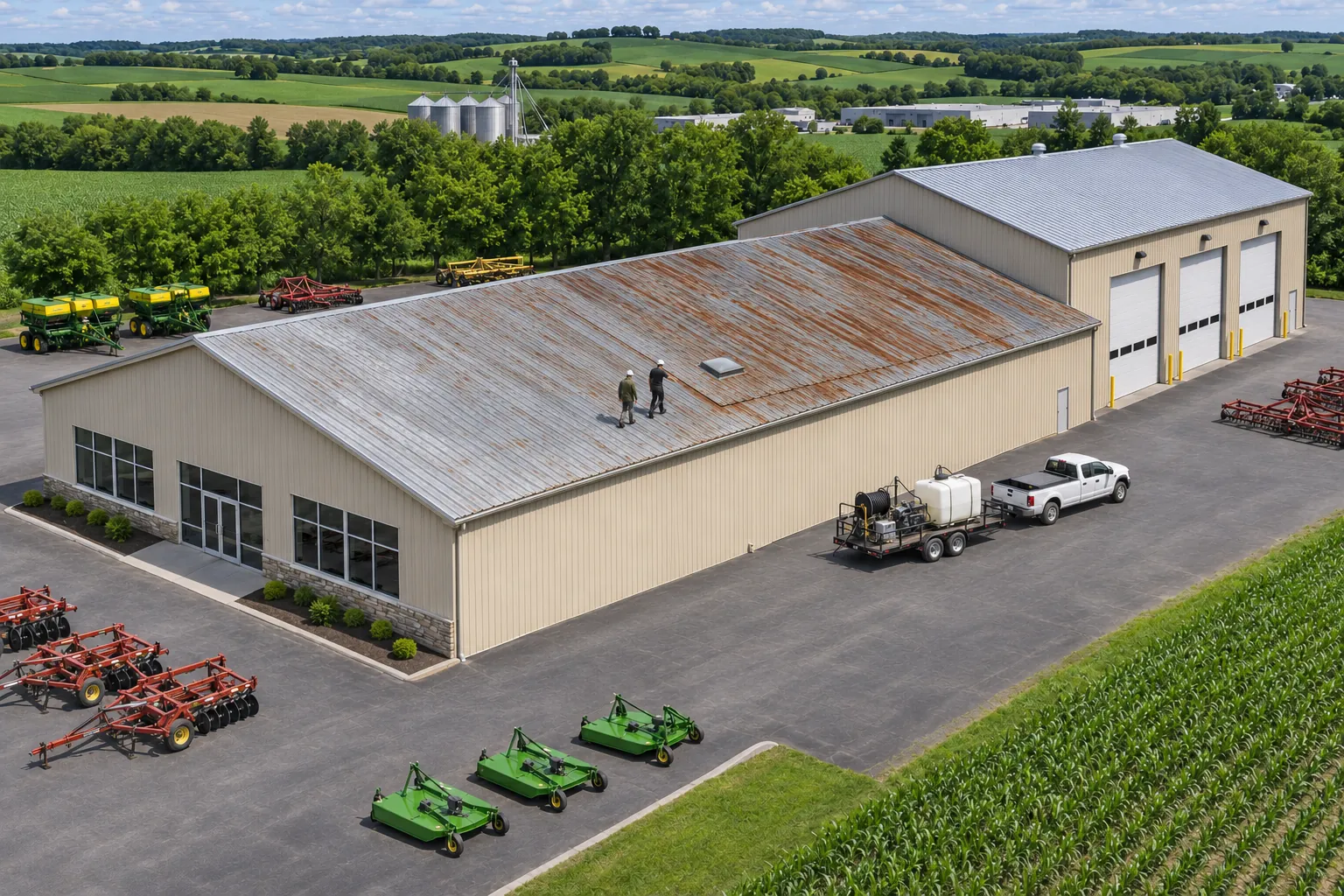
As a Lancaster metal roof coating contractor, we inspect, repair, and coat metal roofs on farm buildings, food plants, and brick warehouses across Lancaster County.
Lancaster metal roof coating jobs usually begin with a sign inside the building. These rows trace each sign to the roof.
Orange runs down the slope from screw rows and laps on a pole building or shop.
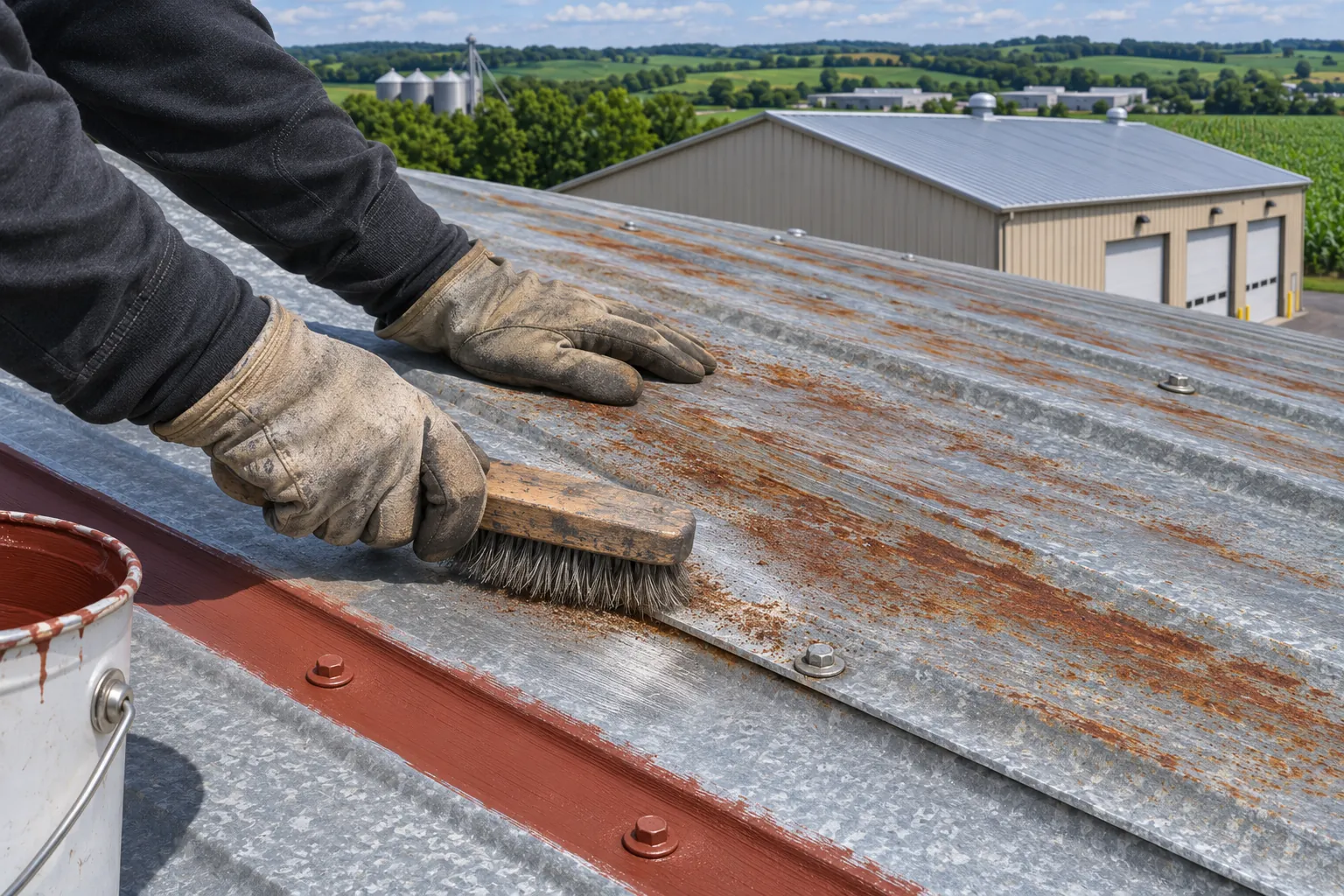
Surface rust has started where washers and laps hold water.
We brush it to firm steel, prime, seal the laps, and coat.
Water shows over production or packing areas after storms.
Exhaust curbs and seams have opened where heat and wash-down wear them hardest.
Curbs are reflashed, seams reinforced, and work is scheduled around production.
Upper walls and beams stay dark long after rain.
Roof-to-brick flashing has loosened, or indoor humidity is condensing on the steel.
We test which it is, rebuild the flashing if needed, and point out ventilation fixes inside.
Drips start along an eave once snow begins melting.
Frozen gutters held meltwater against the eave laps.
Gutters are cleared or repaired, eave laps sealed, and extra coating built up there.
New leaks follow a hailstorm or a night of high wind.
Hail split old coating or dented panels, and wind lifted edge flashing.
We inspect edges and panels, repair splits and flashing, then recoat the damaged areas.
Five steps, in the same order on every roof. The inspection and repairs decide how long the coating keeps working.
We walk every panel, test screws by hand, check laps, gutters, and flashing, and look at the underside where we can reach it.
Stripped screws get larger ones, rust holes are patched, open laps sealed, and loose flashing reset.
Work areas, wash water, and spray zones are planned around equipment, production, and stored goods below.
Pressure washing removes chalk and dirt, rust is brushed down, and primer covers bare steel.
Base and top coats go on at the specified thickness, with extra build at laps, screws, and edges.
A coating over a repaired metal roof gives owners of farm buildings, plants, and warehouses these gains.

Coating bridges side and end laps so water has no open joint to follow.
Primed fastener heads sit under the film, ending slow washer leaks.
White coatings reflect more sun than weathered metal over stored goods.
Crews work from the roof above, so equipment, production, and storage carry on.
Treated surface rust stays sealed away from rain and snowmelt.
A washed roof can take a fresh topcoat when the film wears thin.
Extra film and fabric at eave laps help where ice and meltwater sit.
You keep a record of every screw, lap, and flashing repair made.
Fastener rust caught early keeps the repair list short. Call us and describe the roof, and we will set up a time to look at it.
Five systems, each matched to a roof type. Here is where each one fits on Lancaster buildings.

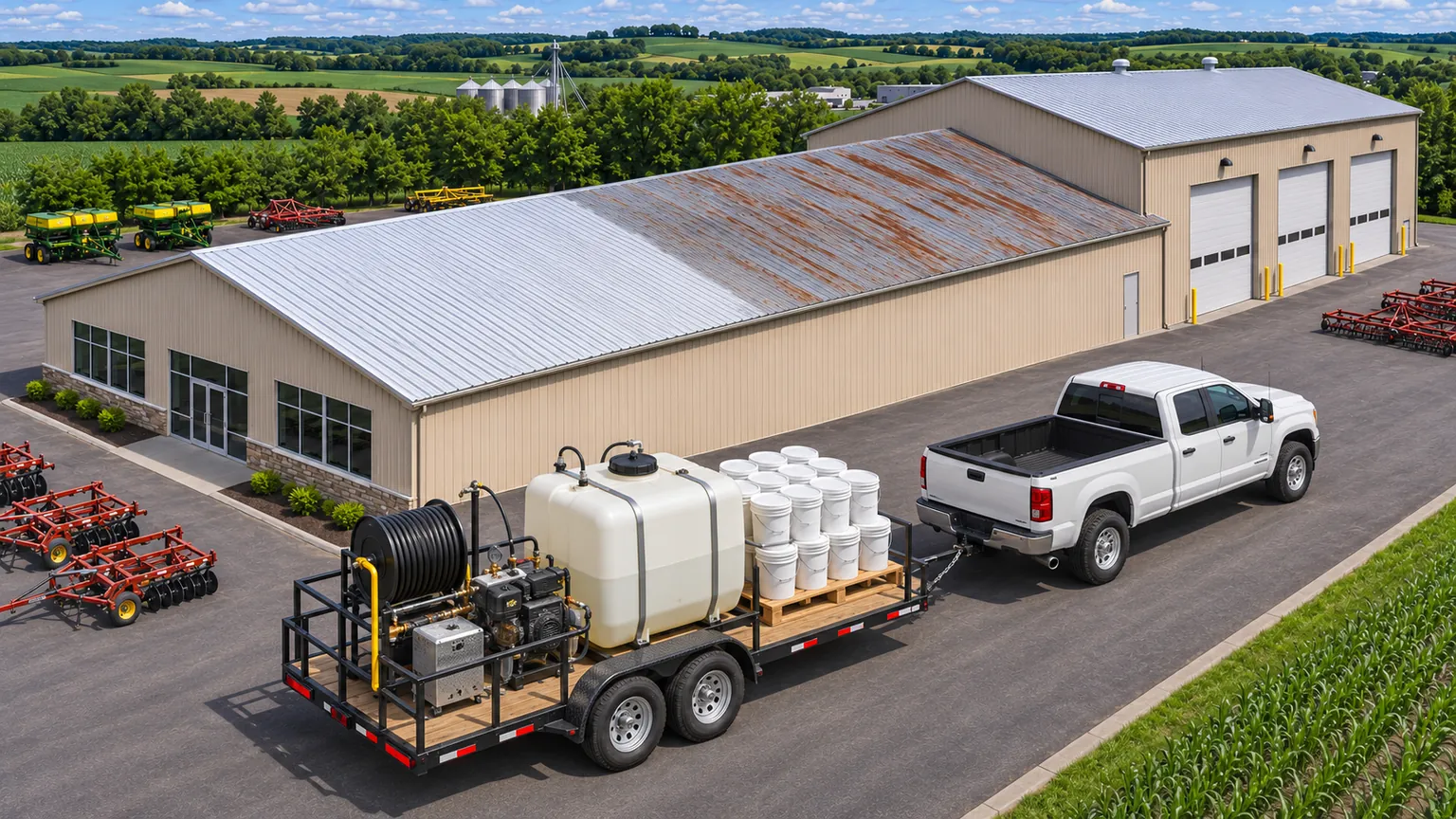
Exposed-fastener and standing seam roofs on shops, barns, and plants get screws, laps, and rust repaired, then a full coating system matched to the slope and drainage.
Flat and low-slope roofs that keep puddles after rain take silicone once outlets are cleared and the surface passes a primer test.

Water-based acrylic goes on sloped metal roofs that drain fast, applied in dry, mild weather over primed rust and fabric-reinforced laps.

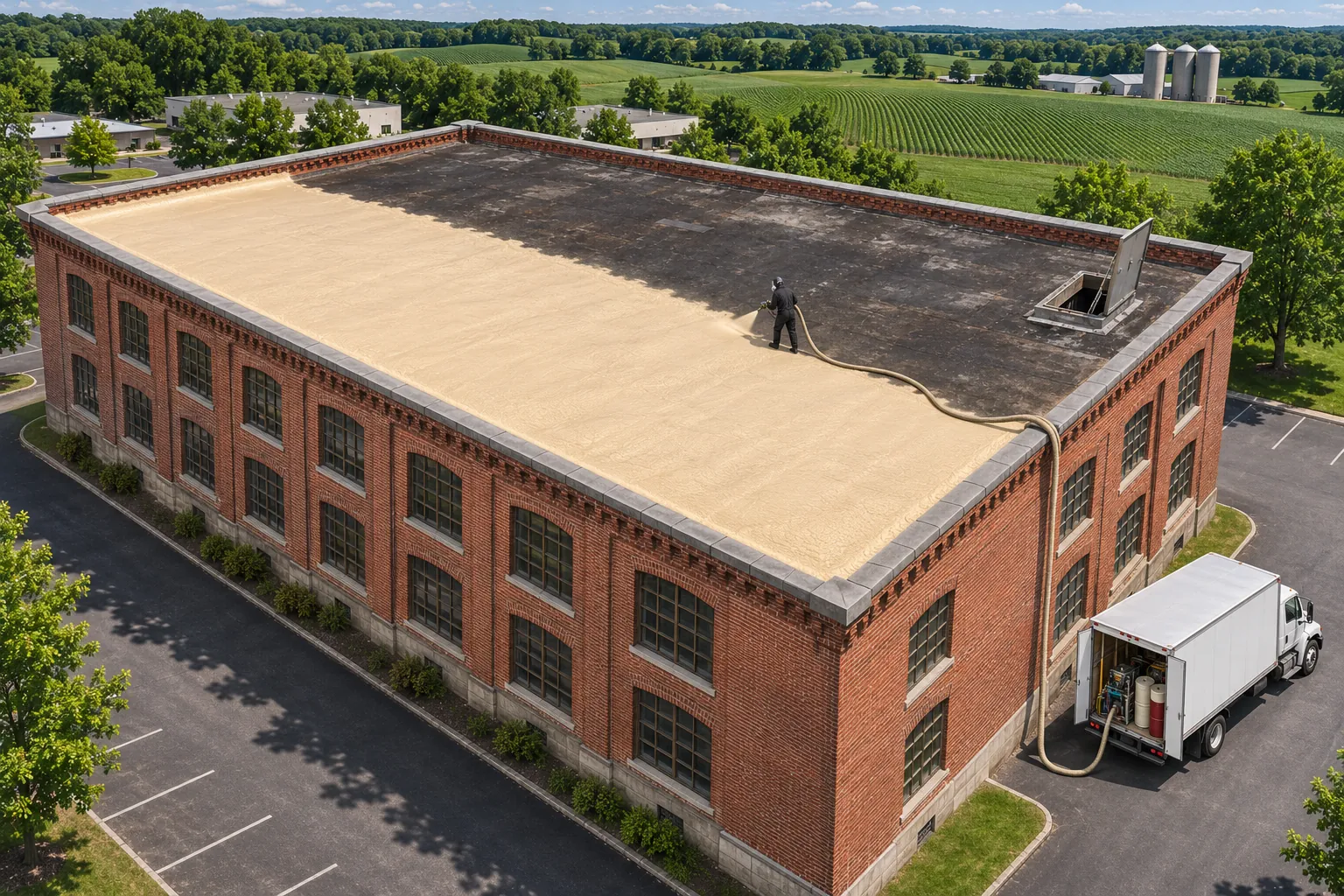
Spray foam adds insulation and one continuous surface over dry metal or flat roofs, finished with a protective topcoat.

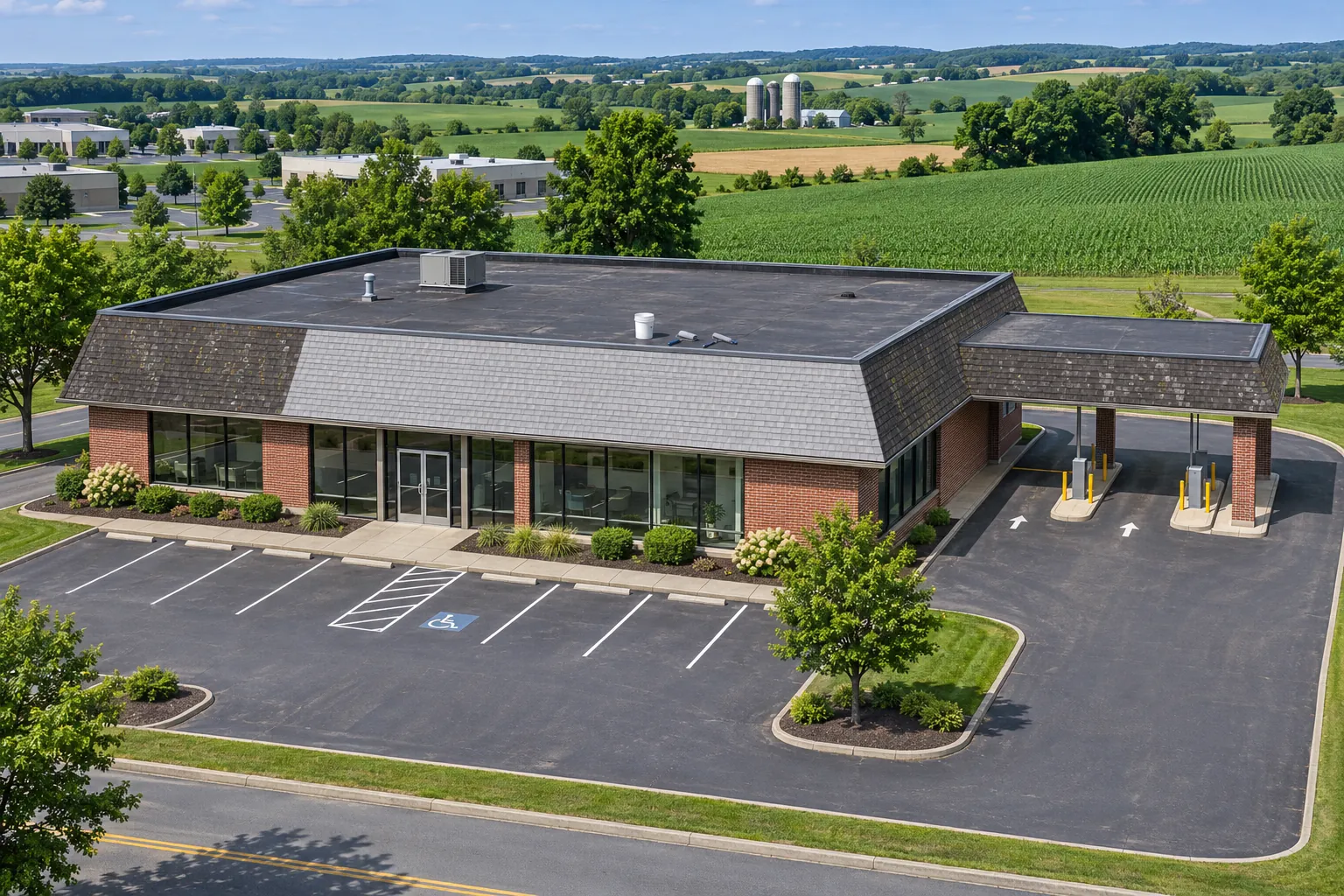
Church, office, and mansard shingle roofs that still lie flat can take a coating approved for asphalt shingles; worn ones get a replacement call.
Coating, repair first, or replacement: every inspection ends in one of these. Here is what moves a roof between them.
| What We Check | Coat Now | Repair, Then Coat | Replace Instead |
|---|---|---|---|
| Rust | On the surface, steel still firm | A few holes we can patch | Perforated or thin across the roof |
| Attachment | Screws hold tight | Loose screws we can upsize | Purlins too weak to hold screws |
| Joints | Laps and ridge caps closed | Open laps we can seal | Panels shifting apart |
| Below the roof | Dry insulation, no condensation | Small wet areas or vent fixes | Wet insulation across large areas |
| Old finish | Firm after washing | Peeling spots to strip | Several failing coats stacked up |
Farm buildings, plants, and brick warehouses in these towns are where we coat metal roofs most. Elsewhere? Call us or send us a message.

Ephrata farm shops and equipment buildings get underside checks for rust and condensation before any coating goes on.
Ephrata metal roof coatingMount Joy warehouses and storage roofs are coated in sections so loading doors and aisles keep working.
Mount Joy metal roof coatingColumbia's older brick warehouses get their past patches tested and opened where needed before coating goes over them.
Columbia metal roof coatingLititz shops and plants get drainage and low spots checked so the coating choice matches how water leaves the roof.
Lititz metal roof coatingMillersville churches, schools, and offices get vent flashings and fan curbs reworked, with work set around building hours.
Millersville metal roof coatingYes, when the rust sits on the surface and the steel beneath is firm. We brush or grind it back, prime the bare metal, and coat over that. Panels with holes or thin, flaking edges get patched or replaced before any coating goes on.
Coating life follows film thickness, adhesion, drainage, and how much traffic the roof sees. We measure thickness as we apply it and note the spots that wear first, such as paths to rooftop units. Regular washing and touch-ups keep it working longer.
Often it can. Farm buildings tend to rust first at overlaps and screw rows, so we check those closely along with how firmly the panels are attached. Where metal is thin or water is trapped in a lap, that gets repaired before coating comes up.
Ice in a gutter holds meltwater against the eave, and it can work under laps on panels that are otherwise in good shape. We check gutter routes and eave laps once the roof is safe to walk.
Heavy wet snow raises a separate question of structural load.
A quote should list the preparation and the coating system. Coating plans at about $2.50 to $4.00 per square foot of roof, with replacement near $5 to $8.
Size, access, rust and seam prep, fastener sealing, coating type, thickness, coat count, penetrations, and flashing set the real figure.
Edges take the worst of summer storms. Wind can lift edge flashing, and hail can split coating at exposed details. We check attachment, split metal, and punctures at the perimeter before adding any coating.
Tell us about the building, the leaks, and the roof. We inspect it, repair what has failed, and coat it.